
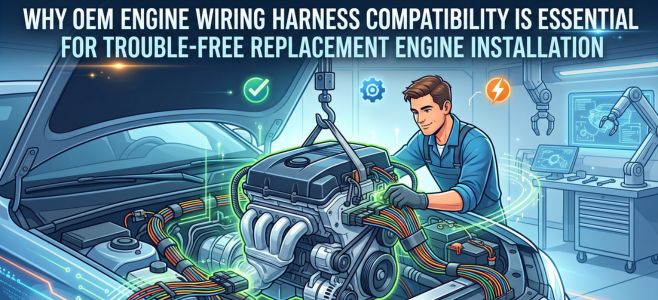
Why OEM Engine Wiring Harness Compatibility Is Essential for Trouble-Free Replacement Engine Installation
Modern vehicle engines rely on complex electrical systems to communicate with sensors, control modules, and fuel management components. When replacing an engine, ensuring OEM engine wiring harness compatibility is just as important as selecting the correct engine itself. A compatible wiring harness allows the replacement engine to communicate properly with the vehicle’s electronics, reducing installation problems and maintaining factory performance. Buyers investing in quality used engines and used engines with warranty should always verify wiring harness compatibility before installation.
Table of Contents
- What is an OEM engine wiring harness?
- Why compatibility matters
- Common installation problems
- Benefits of OEM-compatible wiring
- Choosing the right replacement engine
- Installation and maintenance tips
- FAQs
Understanding the Engine Wiring Harness
The engine wiring harness is the electrical network that connects the engine to the vehicle’s electronic systems.
It carries signals between components such as:
- Engine Control Module (ECM)
- Fuel injectors
- Ignition coils
- Oxygen sensors
- Crankshaft position sensor
- Camshaft position sensor
- Throttle body
- Temperature sensors
Without proper electrical communication, even a mechanically sound engine may not operate correctly.
Why OEM Compatibility Matters
OEM (Original Equipment Manufacturer) wiring harnesses are engineered specifically for a vehicle’s engine and electronic architecture.
A compatible harness ensures:
- Correct electrical connections
- Accurate sensor communication
- Reliable engine starting
- Proper fuel delivery
- Stable ignition timing
- Consistent engine performance
Using the correct wiring harness minimizes the risk of installation issues and diagnostic faults.
Preventing Common Installation Problems
An incompatible wiring harness can create numerous issues during or after engine installation.
These may include:
- Engine warning lights
- Hard starting
- Rough idling
- Poor fuel economy
- Sensor communication errors
- Misfires
- Transmission shifting problems
Verifying compatibility before installation helps avoid these costly complications.
Supporting Modern Engine Management Systems
Today’s vehicles depend heavily on electronic control systems.
The wiring harness enables communication between the replacement engine and:
- Engine Control Module (ECM)
- Transmission Control Module (TCM)
- Anti-lock Braking System (ABS)
- Stability control system
- Emissions control equipment
- Diagnostic systems
OEM compatibility helps these systems work together as intended.
Maintaining Factory Performance
A properly matched wiring harness preserves the manufacturer’s original engine calibration.
Drivers benefit from:
- Smooth acceleration
- Reliable cold starts
- Better throttle response
- Improved fuel efficiency
- Stable idle quality
- Reduced emissions
Maintaining factory electrical specifications contributes to dependable long-term performance.
Why Quality Used Engines Are Worth Considering
Many vehicle owners choose quality used engines because they provide an excellent balance of affordability and reliability.
Professionally inspected engines often undergo:
- Compression testing
- Leak inspections
- Visual evaluations
- Mileage verification
- Compatibility checks
Pairing a verified engine with the correct OEM wiring harness helps ensure a successful replacement.
Benefits of Used Engines with Warranty
Purchasing used engines with warranty offers additional confidence throughout the replacement process.
Many reputable suppliers provide:
- Warranty protection
- Inspection documentation
- Verified compatibility
- Professional technical support
- Engine testing reports
Warranty-backed engines reduce risk while providing peace of mind for buyers.
Professional Installation Matters
Even with compatible components, professional installation is essential.
Experienced technicians typically:
- Inspect the wiring harness
- Check electrical connectors
- Test sensor operation
- Verify ECU communication
- Perform diagnostic scans
- Confirm proper engine operation
Professional installation helps maximize engine reliability and performance.
Choosing a Reliable Supplier
When purchasing a replacement engine, look for suppliers that offer:
- OEM compatibility verification
- Detailed inspection reports
- Warranty options
- Accurate mileage records
- Technical assistance
- Proven industry reputation
Reliable suppliers help simplify the replacement process while reducing the likelihood of installation issues.
Proper Maintenance After Installation
Once the replacement engine is installed:
- Inspect electrical connectors periodically.
- Keep engine wiring clean and secure.
- Repair damaged insulation promptly.
- Monitor dashboard warning lights.
- Perform regular diagnostic scans.
- Follow manufacturer maintenance schedules.
Routine inspections help maintain reliable electrical performance over time.
Future of Engine Electrical Systems
Automotive electronics continue advancing rapidly. Future developments are expected to include:
- AI-assisted diagnostics
- Smarter engine control modules
- Advanced wiring materials
- Predictive electrical monitoring
- Simplified modular harness designs
These innovations will continue improving engine reliability and serviceability.
Final Thoughts
OEM engine wiring harness compatibility is a critical factor in achieving a successful replacement engine installation. Proper electrical communication ensures that sensors, control modules, and engine management systems work together seamlessly, preserving factory performance and reducing the likelihood of diagnostic problems.
For buyers choosing quality used engines, verifying wiring harness compatibility helps protect their investment and supports dependable long-term operation. Likewise, selecting used engines with warranty from reputable suppliers provides additional assurance through professional inspections and warranty coverage. As vehicle electronics become increasingly sophisticated in 2026, ensuring OEM wiring compatibility remains one of the most important steps toward a trouble-free engine replacement.
FAQs
1. What is an OEM engine wiring harness?
An OEM engine wiring harness is the factory electrical system that connects the engine with sensors, control modules, and other electronic components.
2. Why is wiring harness compatibility important?
Compatible wiring ensures accurate communication between the engine and vehicle electronics while preventing warning lights, sensor faults, and performance issues.
3. Are quality used engines reliable?
Yes. Professionally inspected quality used engines deliver dependable performance when properly matched to the vehicle and installed correctly.
4. Why should I choose used engines with warranty?
Used engines with warranty provide extra confidence through professional inspection, warranty coverage, and dependable supplier support.
5. Can an incorrect wiring harness damage engine performance?
Yes. An incompatible wiring harness can cause communication errors, poor performance, diagnostic codes, lower fuel efficiency, and electrical issues.