
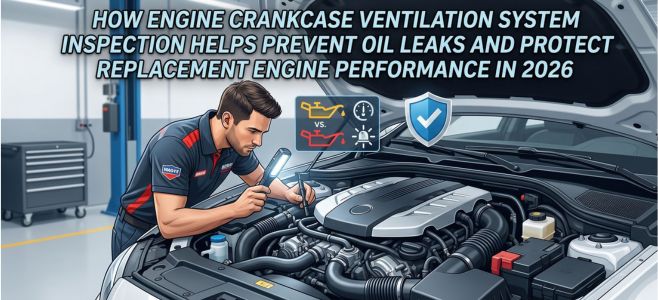
How Engine Crankcase Ventilation System Inspection Helps Prevent Oil Leaks and Protect Replacement Engine Performance in 2026
A properly functioning crankcase ventilation system is essential for maintaining engine lubrication, pressure balance, and overall reliability. When replacing an engine, inspecting this system can help identify blocked hoses, faulty PCV components, excessive crankcase pressure, and other problems that may contribute to oil leaks. Buyers looking for quality used engines should therefore consider crankcase ventilation condition as part of the replacement-engine evaluation. Similarly, choosing used engines with warranty can provide additional protection when unexpected mechanical issues arise after installation.
What Is an Engine Crankcase Ventilation System?
The crankcase ventilation system manages gases and pressure that build up inside an engine’s crankcase during normal operation. Combustion gases can pass the piston rings and enter the crankcase, creating what is commonly known as blow-by.
Without proper ventilation, pressure can increase inside the crankcase. The ventilation system redirects these gases through an appropriate pathway so they can be managed by the engine’s intake and emissions systems.
Many modern engines use a Positive Crankcase Ventilation (PCV) system consisting of components such as:
- PCV valves
- Ventilation hoses
- Breather passages
- Oil separators
- Connecting pipes
- Intake connections
The exact design varies by engine and vehicle.
Why Crankcase Ventilation Inspection Matters
A damaged or restricted ventilation system can create excessive pressure inside the crankcase. That pressure may force engine oil past seals and gaskets.
Potential leak points include:
- Valve cover gaskets
- Crankshaft seals
- Camshaft seals
- Oil pan gaskets
- Oil filler seals
- Other engine joints
Inspecting the ventilation system before or during replacement-engine installation can help identify conditions that might contribute to these problems. For buyers evaluating quality used engines, this inspection provides another useful checkpoint beyond mileage, compression, and general physical condition.
How Excessive Crankcase Pressure Causes Oil Leaks
The crankcase is designed to operate within an appropriate pressure range. When ventilation becomes restricted, pressure can build up. As pressure increases, engine oil may be pushed toward sealing surfaces that were not designed to withstand excessive internal pressure. A weak or aging seal may begin leaking under these conditions.
This means that an oil leak is not always caused solely by a damaged gasket or seal. A ventilation problem can contribute to the underlying pressure imbalance. Identifying the root cause can help prevent repeated repairs after an engine replacement.
Common Crankcase Ventilation Problems
Several issues can affect crankcase ventilation performance.
- Blocked PCV Valve: A clogged PCV valve can restrict the movement of crankcase gases. Deposits may accumulate over time and prevent the valve from operating correctly.
- Damaged Ventilation Hoses: Cracked, collapsed, disconnected, or restricted hoses can interfere with proper airflow.
- Contaminated Oil Separator: Some engines use oil separators to prevent excessive oil vapor from entering the intake system. Contamination can reduce their effectiveness.
- Restricted Breather Passages: Carbon, sludge, or deposits can restrict internal passages and reduce ventilation efficiency.
- Incorrect Installation: During an engine replacement, incorrectly routed or improperly connected ventilation components can create operational problems even when the replacement engine itself is mechanically sound.
Inspection Before Replacement Engine Installation
A crankcase ventilation inspection should be part of a broader replacement-engine evaluation. Technicians can visually inspect hoses, connections, valves, seals, and related components for signs of damage or contamination. Depending on the vehicle and engine design, additional diagnostic procedures may be used to evaluate crankcase pressure and ventilation operation.
It is also important to compare the replacement engine with the vehicle’s original configuration. Differences in emissions equipment, hose routing, or PCV components may require attention during installation.
Protecting Engine Lubrication Performance
Proper crankcase ventilation supports healthy lubrication by helping maintain appropriate internal pressure.
When ventilation is functioning correctly, engine oil is less likely to be forced through vulnerable sealing points because of excessive pressure. This can help reduce unnecessary oil loss and keep lubrication available for critical components.
Adequate lubrication is important for components such as:
- Pistons
- Crankshaft bearings
- Camshaft components
- Timing components
- Valve-train parts
- Turbocharger components on applicable engine
Maintaining proper oil levels is particularly important after installing a replacement engine.
Crankcase Inspection and Used Engine Selection
When purchasing a replacement engine, buyers often focus on mileage, compression, compatibility, and visible condition. Crankcase ventilation deserves similar attention.
A supplier offering quality used engines should be able to provide useful information about engine condition, compatibility, and available inspection or testing procedures.
Buyers should also ask about:
- Engine identification
- Mileage documentation
- Compatibility
- Testing procedures
- Included components
- Warranty coverage
- Return conditions
These details can make the replacement process more predictable.
Why Warranty Coverage Matters
Even with careful inspection, used mechanical components can experience unexpected problems. This is one reason buyers may consider used engines with warranty coverage. Warranty terms vary considerably between suppliers. Buyers should review what components are covered, the warranty duration, installation requirements, labor provisions, and exclusions before purchasing.
A warranty does not replace proper inspection and installation, but it can provide an additional layer of protection when purchasing a replacement engine.
Maintenance After Engine Installation
Crankcase ventilation should continue to be monitored after installation. Vehicle owners should watch for warning signs such as:
- New oil leaks
- Unusual oil consumption
- Whistling or abnormal ventilation noises
- Rough engine operation
- Oil around seals
- Increased pressure symptoms
- Excessive deposits around ventilation components
Following the vehicle manufacturer’s maintenance recommendations for oil changes and ventilation-system inspection can help support long-term engine performance.
Final Thoughts
Crankcase ventilation inspection is an important but sometimes overlooked part of replacement-engine evaluation. A blocked PCV valve, restricted hose, damaged breather, or excessive crankcase pressure can contribute to oil leaks and potentially affect engine reliability.
For buyers comparing quality used engines, checking crankcase ventilation condition can provide another layer of confidence before installation. Selecting used engines with warranty coverage can also offer additional protection against certain unexpected problems, depending on the supplier’s terms.
By combining proper engine inspection, correct ventilation-system installation, appropriate maintenance, and verified compatibility, vehicle owners can help protect their replacement engine and support dependable performance throughout its service life.
FAQs
1. What does a crankcase ventilation system do?
It manages gases and pressure generated inside the engine crankcase and helps maintain appropriate internal pressure during engine operation.
2. Can a blocked PCV system cause an oil leak?
Yes. Restricted crankcase ventilation can increase internal pressure, which may contribute to oil being pushed past seals and gaskets.
3. Should crankcase ventilation be checked when installing a used engine?
Yes. Checking the PCV system, hoses, breather passages, and related components can help identify potential problems before or during installation.
4. What should I check when buying a replacement engine?
Consider engine compatibility, identification, mileage information, testing procedures, physical condition, included components, and warranty terms.
5. Are used engines with warranty worth considering?
Warranty coverage can provide additional protection against specified defects or failures, but buyers should carefully review the exact warranty terms, exclusions, duration, and installation requirements.