

How Engine Oil Pan Rail Flatness Affects Gasket Sealing After Engine Replacement
A successful engine replacement requires careful attention to sealing surfaces, mounting points, and component alignment. One area that deserves particular attention is the oil pan rail, which forms the contact surface between the engine block and the oil pan gasket. If this surface is warped, scratched, or uneven, the gasket may not compress consistently, increasing the risk of oil leaks after installation.
When purchasing a Used Engine, checking the oil pan mounting surface can help identify potential problems before the replacement process begins. Buyers comparing used engines and transmissions should also understand how oil pan rail condition influences sealing reliability and long-term engine performance.
What Is an Engine Oil Pan Rail?
The oil pan rail is the machined or formed mounting surface where the engine oil pan attaches to the engine block. A gasket or approved sealing material is positioned between these components to prevent engine oil from escaping.
For the gasket to seal correctly, the mating surfaces must meet the manufacturer’s requirements for flatness, cleanliness, and surface condition. An uneven oil pan rail can create gaps or inconsistent gasket compression. Even when new sealing material is installed, an unsuitable mounting surface may allow oil to escape during engine operation.
Why Oil Pan Rail Flatness Matters for Gasket Sealing
Gaskets are designed to compress within a specified range when components are tightened together. This compression helps create a continuous seal around the oil pan. If the mounting rail is flat, the fasteners can generally distribute clamping force more consistently across the sealing area.
However, a warped or damaged rail may produce uneven pressure. Some sections of the gasket may become excessively compressed, while others receive insufficient compression.
This can lead to several problems:
- Oil seepage around the oil pan perimeter
- Repeated gasket failure
- Uneven gasket compression
- Loose or inconsistent sealing around bolt locations
- Oil accumulation on nearby engine components
Correct rail flatness is therefore an important part of preventing leaks after engine installation.
Common Causes of Oil Pan Rail Distortion
Oil pan rail damage can develop during normal operation, previous repairs, or improper handling.
1. Excessive Fastener Tightening
Overtightening oil pan bolts can distort certain oil pan flanges, particularly when the pan material is relatively thin. Excessive tightening may also damage threads or create uneven pressure around the sealing surface.
Technicians should always follow the manufacturer’s tightening sequence and torque specifications.
2. Previous Gasket Removal
Using sharp metal tools or aggressive scraping techniques during gasket removal can scratch or damage the engine block’s sealing surface.
Even small surface defects may interfere with gasket sealing, depending on their location and depth.
3. Heat and Mechanical Stress
Repeated temperature changes and operating stress can contribute to distortion in some engine components. The extent of the effect depends on material, design, operating conditions, and previous maintenance.
4. Improper Storage or Handling
An engine or oil pan that is dropped, stored incorrectly, or handled carelessly may develop mounting surface damage. This is particularly important when inspecting replacement engines before installation.
How Technicians Check Oil Pan Rail Flatness
Before installing the oil pan, technicians should inspect the mounting surfaces using appropriate tools and manufacturer-approved procedures.
- Visual inspection: Examine the oil pan rail and gasket contact area for scratches, corrosion, dents, and signs of previous repairs.
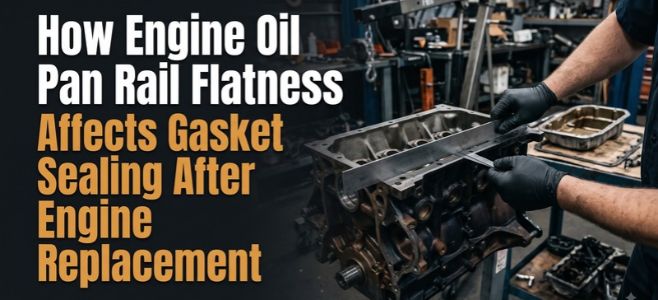
- Straightedge inspection: A precision straightedge can help identify uneven areas along the mounting surface. The manufacturer’s specified measurement method and tolerance should always be followed.
- Feeler gauge measurement: Where permitted by the service procedure, feeler gauges can help assess gaps between the straightedge and the sealing surface.
- Oil pan flange inspection: The oil pan itself should also be checked for distortion, particularly around bolt holes. A damaged pan can cause sealing problems even when the engine block rail is flat.
- Thread inspection: Check bolt holes and fasteners for damage, contamination, or previous improper repairs.
If distortion exceeds the permitted limits, the affected component may require approved repair or replacement.
Choosing the Correct Gasket and Sealing Method
Selecting the right gasket is just as important as inspecting the mounting surface. Different engines use different gasket materials and sealing arrangements, including molded rubber, cork-based materials, composite gaskets, and manufacturer-specified liquid sealants.
A replacement gasket must match the engine application and installation requirements. Technicians should also consider:
- Correct gasket dimensions and material
- Manufacturer-approved sealant requirements
- Surface cleanliness before installation
- Specified bolt tightening sequence
- Correct torque values
- Required curing time for approved sealants
Applying excessive sealant is not a reliable solution for a warped mounting surface. Excess material can also enter the oil pan and potentially interfere with lubrication components.
What Buyers Should Check Before Purchasing a Used Engine
When comparing a Used Engine with other replacement options, buyers should review the condition of the oil pan, mounting rail, and surrounding sealing areas.
Important inspection points include:
- Look for oil residue around the oil pan joint.
- Check for visible dents, scratches, or corrosion.
- Ask whether the engine has undergone previous oil pan or gasket repairs.
- Review available inspection and testing records.
- Confirm engine compatibility with the vehicle.
- Understand the seller’s warranty coverage and installation requirements.
Buyers searching for used engines and transmissions should also compare supplier reputation, component condition, compatibility information, and return policies before making a purchase.
Final Thoughts
Oil pan rail flatness plays an important role in maintaining reliable gasket sealing after engine replacement. Warped surfaces, damaged mounting areas, and incorrect fastener tightening can cause uneven gasket compression and recurring oil leaks.
Whether purchasing a Used Engine or comparing used engines and transmissions, checking the oil pan sealing surface is a valuable part of pre-installation inspection. Combining accurate measurements, suitable gasket selection, and manufacturer-approved installation procedures helps protect engine reliability and reduce avoidable repair work.
Frequently Asked Questions
1. What is an oil pan rail?
It is the mounting surface where the engine oil pan attaches to the engine block, with a gasket or approved sealant providing the oil seal.
2. Can a warped oil pan rail cause an oil leak?
Yes. An uneven mounting surface can prevent consistent gasket compression, allowing engine oil to escape.
3. How do technicians check oil pan rail flatness?
They commonly use a precision straightedge and, where specified, feeler gauges to identify surface irregularities and compare measurements with manufacturer tolerances.
4. Can overtightening oil pan bolts damage the sealing surface?
Yes. Excessive tightening can distort the oil pan flange, damage threads, and create uneven gasket compression.
5. Should I inspect the oil pan rail before installing a Used Engine?
Yes. Checking the oil pan, mounting rail, gasket contact area, and fastener condition can help identify potential sealing problems before installation.