
How Engine Bearing Oil Clearance Reveals Internal Wear and Lubrication Risks in 2026
Engine bearing oil clearance is an important measurement when evaluating the internal condition of a replacement engine. It refers to the small space between a bearing surface and the rotating crankshaft journal, allowing a controlled oil film to support smooth movement and reduce metal-to-metal contact. When purchasing Used Engines, understanding bearing clearance can help buyers identify possible internal wear and lubrication problems. Selecting quality used engines with reliable inspection information can also help reduce the risk of unexpected mechanical repairs after installation.
Understanding Engine Bearing Oil Clearance
Engine bearings support rotating components such as the crankshaft and connecting rods. They are designed to maintain a precise operating clearance that allows engine oil to circulate between the bearing surface and the crankshaft journal.
This oil film reduces friction, manages heat, and protects internal components during operation. The correct clearance depends on the engine’s design, bearing dimensions, crankshaft specifications, and operating requirements.
If the clearance is too tight, oil flow may be restricted and the bearing may experience excessive friction or overheating. If it is too wide, the engine may struggle to maintain the required oil pressure at the bearing, potentially increasing noise and wear.
For this reason, bearing clearance measurements are an important part of professional engine inspection and rebuilding procedures.
How Incorrect Bearing Clearance Indicates Internal Wear
Engine bearing clearances can change as components wear over time. Repeated operation, inadequate lubrication, contamination, excessive heat, and incorrect maintenance can contribute to changes in bearing and crankshaft dimensions.
Several warning signs deserve attention:
- Low oil pressure: Excessive bearing clearance can contribute to increased oil leakage within the lubrication system.
- Knocking sounds: Worn connecting rod or main bearings may produce knocking noises, particularly under certain operating conditions.
- Metal particles in oil: Bearing wear can release metallic material into the engine oil.
- Excessive bearing temperature: Insufficient lubrication or unsuitable clearance can increase friction and heat.
- Crankshaft journal damage: Scoring, scratches, or uneven wear may indicate previous lubrication problems or contamination.
These symptoms do not prove that bearing clearance is incorrect. A proper inspection is needed to identify the underlying cause.
Why Oil Clearance Matters for Engine Lubrication
Engine oil performs several important functions, including reducing friction, carrying heat away from moving components, and helping protect internal surfaces from wear. Bearing clearance influences how oil moves through the space between the bearing and crankshaft journal. The lubrication system must maintain an appropriate oil supply and pressure to support the rotating assembly.
When clearance is outside the manufacturer’s specified range, the oil film may not perform as intended. Excessive clearance can contribute to oil pressure loss, while insufficient clearance may increase the risk of friction-related damage.
Oil viscosity, temperature, pump condition, engine speed, and bearing geometry also affect lubrication performance. Therefore, bearing clearance should always be evaluated alongside the complete lubrication system.
How Mechanics Measure Engine Bearing Clearance
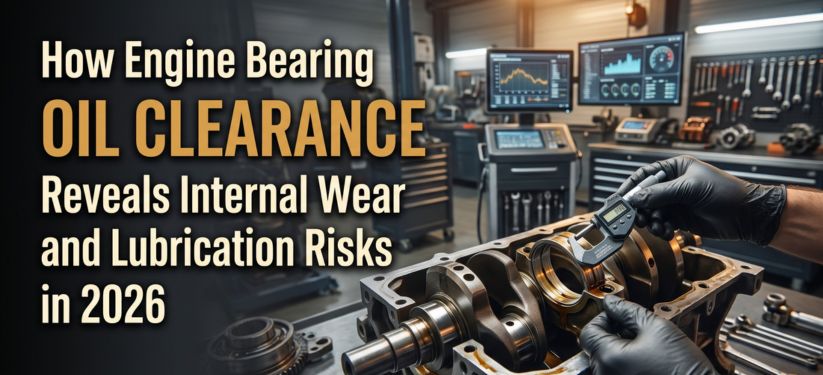
A qualified technician uses measurement procedures and tools appropriate for the engine design. Common methods include precision micrometers, dial bore gauges, and Plastigage for certain assembly checks.
A typical inspection process involves:
- Inspecting crankshaft journals: Check journal surfaces for scoring, scratches, discoloration, and uneven wear.
- Measuring journal diameter: Use a suitable micrometer to compare dimensions with manufacturer specifications.
- Checking bearing housing dimensions: Measure the assembled bearing bore using the recommended procedure.
- Calculating oil clearance: Compare the relevant measurements to determine whether the clearance falls within the specified range.
- Inspecting bearing surfaces: Look for unusual wear patterns, embedded particles, heat damage, or material transfer.
Measurements should be taken carefully because incorrect assembly, measuring technique, or temperature can affect results. Plastigage can provide a useful clearance check in suitable applications, but it does not replace every precision measurement required during an engine rebuild.
What Buyers Should Check When Purchasing Used Engines
When comparing Used Engines, buyers should request information about internal inspections and previous operating condition. If the engine has undergone professional testing or rebuilding, ask whether bearing clearances were measured and documented. Useful questions include:
- Were the main and connecting rod bearings inspected?
- Were crankshaft journals checked for scoring and dimensional wear?
- Were oil pressure or lubrication problems reported?
- Was metallic contamination found in the engine oil?
- Are inspection records available for the engine assembly?
A seller may not have detailed internal measurement reports for every used engine. In such cases, buyers should consider an independent inspection when the engine’s history or condition is uncertain.
Why Quality Used Engines Need Proper Lubrication Checks
Choosing quality used engines involves more than checking mileage, exterior appearance, or starting condition. Internal lubrication health is equally important because bearing problems can develop without obvious external signs.
Buyers should also review the condition of the oil pump, pickup tube, oil filter, sump, and related lubrication components. Contamination left in the vehicle’s existing oil cooler or oil lines may also affect a replacement engine if these components are not properly inspected and cleaned where required.
Compatibility should be confirmed using the engine code, vehicle specifications, mounting arrangements, and relevant electronic connections. Warranty terms should be reviewed carefully, including installation requirements and exclusions related to lubrication failures.
Final Thoughts
Engine bearing oil clearance measurements provide valuable information about internal wear and lubrication condition. Clearances outside manufacturer specifications may indicate excessive wear, incorrect assembly, or potential lubrication risks that deserve further investigation.
Buyers evaluating Used Engines should consider available inspection records and professional measurement results whenever possible. Choosing quality used engines with transparent condition information, verified compatibility, and clearly defined warranty terms can support a more confident purchasing decision. Careful evaluation of internal components helps reduce avoidable repair risks and supports dependable replacement engine performance.
Frequently Asked Questions
What is engine bearing oil clearance?
It is the space between an engine bearing and the crankshaft journal. This clearance allows engine oil to form a protective film between moving surfaces.
What happens if bearing oil clearance is too high?
Excessive clearance can contribute to lower oil pressure, increased internal leakage, abnormal engine noise, and accelerated bearing wear.
Can bearing clearance be checked before purchasing Used Engines?
It can be checked through suitable professional inspection procedures. However, access may require partial engine disassembly, so buyers should ask about available inspection records or arrange an independent assessment.
Why should buyers choose quality used engines with inspection information?
Inspection information helps buyers understand the engine’s condition, identify potential internal wear, and make more informed decisions before installation.