
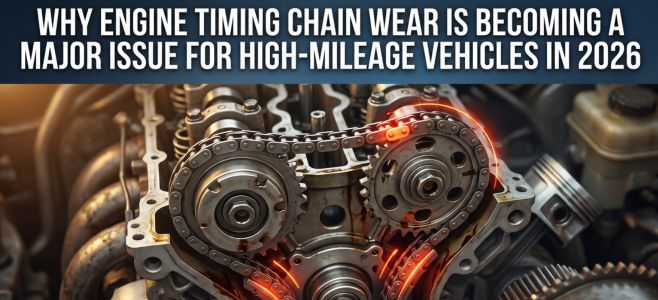
Why Engine Timing Chain Wear Is Becoming a Major Issue for High-Mileage Vehicles in 2026
Engine timing chain wear has become increasingly common in high-mileage vehicles due to extended oil change intervals, modern turbocharged engines, and increased engine stress. Ignoring early warning signs can lead to catastrophic engine damage. In many cases, replacing a severely damaged engine with quality used engines sourced from trusted suppliers of OEM used auto parts is more cost-effective than rebuilding a failed engine.
Table of Contents
- Why timing chain wear is increasing
- Common warning signs
- Quick maintenance tips
- What happens if you ignore the problem?
- Repair vs. replacement
- Why OEM replacement engines make sense
- FAQs
Why Timing Chain Wear Is Increasing in 2026
For many years, timing chains were considered “lifetime components.” Unlike timing belts, chains were expected to last for the life of the engine. However, today’s vehicles operate under much more demanding conditions.
Modern engines feature:
- Turbochargers
- Direct fuel injection
- Smaller engine sizes
- Higher operating temperatures
- Start-stop technology
While these technologies improve fuel economy and reduce emissions, they also place greater stress on internal engine components-including the timing chain.
As vehicles accumulate over 100,000 miles, timing chain wear has become one of the most common causes of expensive engine repairs.
What Does the Timing Chain Do?
The timing chain synchronizes the movement of the:
- Crankshaft
- Camshaft(s)
- Intake valves
- Exhaust valves
Proper timing allows the valves and pistons to move in perfect synchronization.
If the chain stretches or slips, engine timing changes, resulting in poor performance and potentially severe engine damage.
Why Timing Chains Wear Out Earlier
Several factors contribute to premature timing chain wear.
1. Poor Oil Maintenance
Timing chains rely on constant lubrication.
Dirty or degraded engine oil accelerates wear on:
- Chain links
- Guides
- Tensioners
- Sprockets
Skipping scheduled oil changes is one of the leading causes of timing chain failure.
2. High Engine Temperatures
Modern engines operate hotter than previous generations.
Excessive heat causes:
- Faster lubricant breakdown
- Guide deterioration
- Increased chain stretching
3. Extended Service Intervals
Many manufacturers advertise long oil change intervals.
While convenient, extended intervals may increase wear on internal engine components, especially in vehicles driven under severe conditions.
4. Higher Engine Loads
Turbocharged engines generate greater torque from smaller displacement engines.
Higher internal loads increase stress on:
- Timing chains
- Chain tensioners
- Timing guides
Common Warning Signs
Early diagnosis can prevent complete engine failure.
Watch for these symptoms:
- Rattling noise during startup
- Check Engine light
- Rough idle
- Engine misfires
- Reduced acceleration
- Poor fuel economy
- Metal shavings in engine oil
Ignoring these symptoms may allow the chain to stretch further until it eventually skips timing.
Quick Maintenance Tips
Following these simple maintenance practices helps extend timing chain life.
- Change engine oil on schedule.
- Use manufacturer-recommended oil viscosity.
- Replace oil filters regularly.
- Investigate unusual engine noises immediately.
- Scan engine codes when warning lights appear.
- Perform routine engine inspections.
These inexpensive services can prevent thousands of dollars in future repairs.
What Happens If You Ignore Timing Chain Wear?
A worn timing chain rarely repairs itself. As wear increases, problems become more severe.
Potential consequences include:
- Bent valves
- Damaged pistons
- Broken timing guides
- Engine misfires
- Complete engine failure
In interference engines, a failed timing chain often causes internal engine damage that requires extensive repairs or replacement.
Repair or Replace?
If timing chain wear is detected early, replacing the chain, guides, and tensioners may restore normal operation.
However, if the chain has already caused internal damage, rebuilding the engine may become extremely expensive.
At this stage, many vehicle owners choose professionally inspected quality used engines because they offer:
- Lower repair costs
- OEM factory specifications
- Faster installation
- Long-term reliability
Replacing the engine often makes better financial sense than rebuilding a severely damaged powertrain.
Why OEM Used Auto Parts Are a Smart Choice
When replacing an engine, compatibility is essential.
Choosing OEM used auto parts provides several advantages over generic aftermarket components.
Benefits include:
- Factory-engineered compatibility
- Original mounting locations
- Correct electronic integration
- Proven durability
- Reliable long-term performance
OEM components reduce installation problems and help preserve vehicle performance.
How to Choose a Replacement Engine
Not every replacement engine offers the same value.
Look for suppliers that provide:
- Verified mileage
- Compression testing
- Leak inspection
- Warranty options
- Vehicle compatibility assistance
- Professional customer support
These quality checks increase confidence when purchasing replacement components.
Preventing Future Timing Chain Problems
After repairing or replacing the engine, proper maintenance becomes even more important.
Best practices include:
- Regular oil changes
- Quality engine oil
- Cooling system inspections
- Prompt attention to warning lights
- Scheduled maintenance according to manufacturer recommendations
Routine care significantly extends engine life and reduces future repair costs.
Final Thoughts
Timing chain wear is becoming one of the most significant maintenance concerns for high-mileage vehicles in 2026. Increased engine complexity, higher operating temperatures, and extended maintenance intervals all contribute to faster component wear.
Recognizing the warning signs early can help prevent catastrophic engine damage and reduce repair expenses. If severe internal damage has already occurred, replacing the engine with professionally inspected quality used engines sourced from trusted suppliers of OEM used auto parts often provides the most practical and cost-effective solution. Combined with routine maintenance and timely inspections, these OEM replacement components help drivers keep their vehicles reliable and on the road for many more years.
FAQs
1. What causes timing chain wear?
Timing chain wear is commonly caused by poor oil maintenance, high engine temperatures, worn tensioners, extended service intervals, and normal aging of engine components.
2. How do I know if my timing chain is failing?
Common symptoms include rattling noises during startup, engine misfires, poor acceleration, rough idling, reduced fuel economy, and an illuminated Check Engine light.
3. Can I continue driving with a worn timing chain?
Driving with a worn timing chain is risky. If the chain slips or breaks, it can cause severe internal engine damage, especially in interference engines.
4. Is it better to rebuild or replace a damaged engine?
If timing chain failure has caused extensive internal damage, replacing the engine is often more economical than a complete rebuild. Many drivers choose professionally inspected quality used engines for their reliability and cost savings.
5. Why choose OEM used auto parts?
OEM used auto parts provide factory compatibility, reliable performance, proper fitment, and often lower repair costs compared to many aftermarket alternatives.