
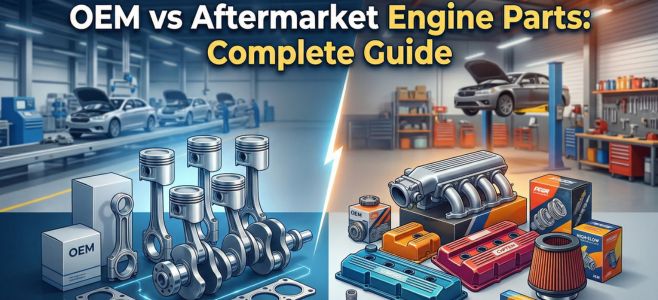
OEM vs Aftermarket Engine Parts: Complete Guide
When it comes to repairing or upgrading your vehicle, choosing between OEM and aftermarket engine parts can be confusing. Both options have their pros and cons, and the right choice depends on your budget, vehicle type, and performance needs. In this complete guide, we’ll break down the differences and help you decide whether OEM used auto parts or quality used engines are the best fit for your car.
What Are OEM Engine Parts?
OEM (Original Equipment Manufacturer) parts are made by the same manufacturer that produced the original components in your vehicle.
Key Features:
- Exact match to original parts
- High quality and reliability
- Designed specifically for your vehicle
Pros:
- Guaranteed compatibility
- Consistent performance
- Often come with warranty
Cons:
- More expensive
- Limited availability for older models
What Are Aftermarket Engine Parts?
Aftermarket parts are produced by third-party manufacturers and are designed to fit a wide range of vehicles.
Key Features:
- Available from multiple brands
- Often more affordable
- Wide variety of options
Pros:
- Lower cost
- Easier to find
- Variety of quality levels
Cons:
- May not fit perfectly
- Quality can vary
- Not always covered by warranty
OEM vs Aftermarket: Key Differences
| Feature | OEM Parts | Aftermarket Parts |
|---|---|---|
| Fit | Exact match | May vary |
| Quality | Consistent | Varies by brand |
| Price | Higher | Usually lower |
| Availability | Limited (especially older cars) | Widely available |
| Warranty | Often included | Depends on manufacturer |
Where Do OEM Used Auto Parts Fit In?
OEM used auto parts are original parts that have been removed from another vehicle, usually from salvage or dismantled cars.
Benefits:
- More affordable than new OEM parts
- Original factory fit
- Reliable if properly inspected
Things to Check:
- Condition and wear
- Mileage of donor vehicle
- Warranty availability
OEM used parts offer a balance between quality and cost.
What About Quality Used Engines?
If your engine needs replacement, quality used engines can be a smart alternative to buying new.
Advantages:
- Cost-effective solution
- Tested and inspected units available
- Suitable for extending vehicle life
Considerations:
- Verify engine compatibility
- Check mileage and history
- Buy from trusted sellers
Cost Comparison
- New OEM parts: Highest cost
- OEM used auto parts: Moderate cost
- Aftermarket parts: Lowest cost (varies)
Your budget will play a major role in your decision.
When to Choose OEM Parts
Go for OEM parts if:
- You want guaranteed compatibility
- Your car is new or under warranty
- You prefer original manufacturer quality
When to Choose Aftermarket Parts
Aftermarket parts are ideal if:
- You’re on a tight budget
- You need quick availability
- You’re upgrading performance
When to Choose Used Engine or Parts
Consider OEM used auto parts or quality used engines if:
- You want to save money
- Your vehicle is older
- Replacement cost is high
These options provide excellent value without compromising too much on quality.
Common Mistakes to Avoid
- Buying without checking compatibility
- Choosing the cheapest option without quality check
- Ignoring warranty details
- Not verifying seller credibility
Avoiding these mistakes ensures better performance and longevity.
Expert Tips for Choosing the Right Parts
- Always compare multiple options
- Check reviews and ratings
- Verify part numbers
- Consult a professional mechanic
- Prefer parts with warranty
Final Thoughts
Choosing between OEM and aftermarket engine parts depends on your priorities-whether it’s quality, cost, or availability. While OEM parts offer reliability and perfect fit, aftermarket parts provide affordability and variety. Meanwhile, options like OEM used auto parts and quality used engines strike a perfect balance between performance and cost.
By understanding the differences and making informed decisions, you can keep your vehicle running smoothly without overspending.