
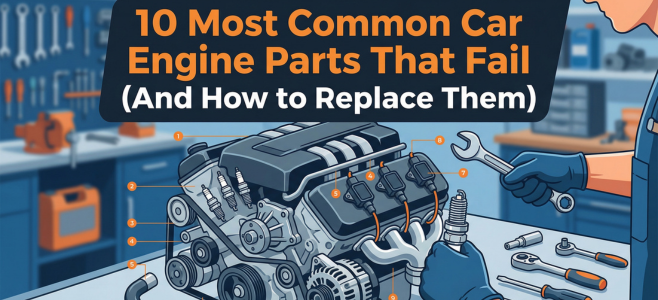
10 Most Common Car Engine Parts That Fail (And How to Replace Them)
Your car’s engine is a complex system made up of many components working together to deliver smooth and reliable performance. Over time, wear and tear can cause certain Car Engine Parts to fail, leading to reduced efficiency or even complete breakdowns. Understanding which parts commonly fail-and how to replace them-can save you money and prevent unexpected issues. In severe cases, you may even need to look for engines for sale or a used transmission for sale to restore your vehicle.
1. Spark Plugs
Why They Fail:
Spark plugs wear out due to constant heat and electrical activity.
Signs:
- Engine misfires
- Poor fuel efficiency
- Difficulty starting
Replacement:
Replacing spark plugs is simple:
- Remove the ignition coil
- Unscrew the old spark plug
- Install a new one and tighten properly
2. Fuel Pump
Why It Fails:
Fuel pumps can fail due to contamination or electrical faults.
Signs:
- Engine sputtering
- Loss of power
- Difficulty starting
Replacement:
- Locate the fuel pump (usually inside the fuel tank)
- Disconnect fuel lines
- Install a new pump
3. Radiator
Why It Fails:
Corrosion, leaks, or blockages can damage the radiator.
Signs:
- Engine overheating
- Coolant leaks
- Steam from the hood
Replacement:
- Drain coolant
- Remove hoses and mounting bolts
- Install a new radiator
4. Timing Belt
Why It Fails:
Timing belts wear out over time and may snap if not replaced.
Signs:
- Ticking noise
- Engine won’t start
- Rough running
Replacement:
- Remove engine covers
- Align timing marks
- Replace the belt carefully
5. Battery
Why It Fails:
Batteries degrade over time or due to extreme temperatures.
Signs:
- Slow engine crank
- Electrical malfunctions
- Warning light on dashboard
Replacement:
- Disconnect the old battery
- Install a new one
- Secure terminals properly
6. Alternator
Why It Fails:
The alternator may fail due to worn internal components.
Signs:
- Dim headlights
- Battery not charging
- Electrical failures
Replacement:
- Remove the drive belt
- Disconnect wiring
- Install a new alternator
7. Air Filter
Why It Fails:
Air filters clog with dust and debris over time.
Signs:
- Reduced engine power
- Poor fuel efficiency
Replacement:
- Open air filter housing
- Remove old filter
- Insert a new one
8. Oxygen Sensor
Why It Fails:
Oxygen sensors degrade due to carbon buildup.
Signs:
- Check engine light
- Increased fuel consumption
Replacement:
- Locate the sensor in the exhaust system
- Remove and replace with a new one
9. Water Pump
Why It Fails:
Wear, leaks, or coolant contamination can damage the pump.
Signs:
- Coolant leaks
- Overheating engine
- Grinding noise
Replacement:
- Remove belts and hoses
- Replace the water pump
- Refill coolant
10. Engine (Major Failure)
Why It Fails:
Engines fail due to poor maintenance, overheating, or oil issues.
Signs:
- Knocking sounds
- Excessive smoke
- Loss of power
Replacement:
When the engine is beyond repair, replacing it is often the best solution. Searching for engines for sale can help you find affordable options. Additionally, pairing it with a reliable used transmission for sale ensures your vehicle runs smoothly without the cost of buying a new car.
Tips to Prevent Engine Part Failure
Preventive maintenance can help you avoid costly repairs:
- Follow your vehicle’s service schedule
- Use high-quality oil and fuel
- Replace worn-out parts on time
- Keep your engine clean
- Address warning signs immediately
Regular care significantly extends the life of your engine components.
When to Repair vs Replace
Not every issue requires a full replacement.
Repair When:
- The issue is minor
- The part is inexpensive
- The vehicle is relatively new
Replace When:
- Repair costs are too high
- Multiple components are failing
- The engine or transmission is severely damaged
Making the right decision can save you money in the long run.
Final Thoughts
Understanding the most common car engine parts that fail helps you stay proactive with maintenance and avoid unexpected breakdowns. From small components like spark plugs to major systems like the engine itself, timely replacement is essential for keeping your vehicle in top condition.
If major failures occur, exploring options like engines for sale and a used transmission for sale can be a smart and cost-effective way to extend your car’s life. With proper care and informed decisions, you can keep your vehicle running smoothly for years to come.