

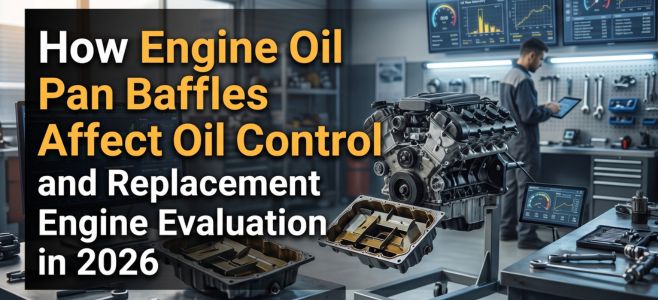
How Engine Oil Pan Baffles Affect Oil Control and Replacement Engine Evaluation in 2026
Engine lubrication is essential for protecting internal components from friction, overheating, and premature wear. However, maintaining a consistent oil supply can become more challenging when a vehicle accelerates, brakes, or corners sharply. The oil pan baffle helps manage oil movement inside the sump, supporting reliable oil pickup under varying driving conditions. Buyers researching affordable used engines should understand how oil pan design affects lubrication, while those comparing used engines with warranty should also consider the condition of the oil pan and associated lubrication components before purchasing a replacement engine.
What Is an Engine Oil Pan Baffle?
The oil pan, sometimes called the sump, sits beneath the engine and stores oil before it circulates through the lubrication system. Inside or around the pan, baffles and related structures help control oil movement and reduce excessive sloshing.
Depending on the engine design, these components may include fixed partitions, directional openings, trap doors, or other oil-control features. Their purpose is to help keep oil available near the pickup tube, which draws oil toward the pump.
Baffle designs differ according to engine layout and intended use. A conventional passenger vehicle may have a relatively simple arrangement, while performance engines designed for sustained cornering may use more specialized oil-control systems.
Why Oil Control Matters During Acceleration and Cornering
Engine oil moves in response to vehicle motion. During hard acceleration, braking, or cornering, oil can shift away from the pickup area. If the pickup temporarily draws in air instead of oil, lubrication pressure may drop.
An effective baffle helps limit unwanted oil movement and keeps oil near the pickup for more consistent supply. This is especially important in applications exposed to repeated high engine speeds, sharp turns, or demanding operating conditions.
Poor oil control can contribute to oil pressure fluctuations. If lubrication is interrupted, critical components such as crankshaft bearings, connecting rod bearings, and other moving parts may experience increased wear or damage.
However, baffles alone cannot guarantee uninterrupted lubrication. Oil level, pump condition, pickup clearance, oil viscosity, engine design, and operating conditions all affect system performance.
Common Signs of Oil Pan or Lubrication Problems
When evaluating a replacement engine, buyers should check for evidence of oil pan damage or possible lubrication issues. Warning signs may include:
- Dents or deformation that could interfere with the oil pickup.
- Oil leaks around the pan gasket, drain plug, or sealing surfaces.
- Evidence of previous impact damage beneath the engine.
- Metallic debris found during an appropriate oil or filter inspection.
- Documented oil pressure warnings or unexplained lubrication problems.
A dented oil pan does not always mean the engine is damaged, but deformation near the pickup can be concerning. A qualified technician should inspect the pan and pickup clearance before the engine is installed or returned to service.
How Oil Pan Baffle Design Helps Buyers Evaluate Used Engines
When shopping for affordable used engines, price should be only one part of the decision. A replacement engine with a damaged oil pan or an unsuitable lubrication configuration may require additional repairs before installation.
Ask the supplier whether the oil pan is original to the engine, whether it has sustained impact damage, and whether the pickup tube and related components have been inspected. If the engine came from a different vehicle configuration, verify that the pan and pickup are appropriate for the intended installation.
This is particularly important when the replacement engine will be used in a vehicle with different chassis clearance, oil pan shape, or mounting requirements. Some engine families use different sump configurations depending on vehicle application.
Buyers should confirm compatibility using the engine code, vehicle specifications, and manufacturer parts information rather than relying on appearance alone.
What to Check When Comparing Used Engines With Warranty
A warranty can provide additional purchase protection, but coverage varies by supplier and contract. When comparing used engines with warranty, review the written terms and confirm which internal components and lubrication-related failures are covered.
Before purchasing, ask:
- Has the oil pan been inspected for cracks, dents, and sealing damage?
- Are the oil pickup tube and lubrication components included?
- Does the warranty cover internal engine damage associated with lubrication failure, and under what conditions?
- Are professional installation and documented oil changes required?
- What procedures must be followed if an oil pressure warning appears after installation?
Do not assume that every warranty covers oil pans, external accessories, labor, or damage caused by incorrect installation. Obtain the relevant terms in writing and follow the supplier’s installation instructions.
Maintenance Practices That Support Reliable Oil Control
After installing a replacement engine, maintaining the lubrication system is essential. Use the oil grade and specification recommended by the engine or vehicle manufacturer, maintain the correct oil level, and replace the filter at the specified intervals.
Inspect for leaks and respond promptly to oil pressure warnings. If the oil pressure warning remains illuminated while the engine is running, stop the engine safely and investigate before continuing to drive.
Avoid modifying or removing oil-control baffles without appropriate engineering guidance. Changes to the pan or pickup assembly can affect oil supply and may create serious lubrication problems.
Final Thoughts
Oil pan baffle design helps control oil movement and maintain oil availability near the pickup during acceleration, braking, and cornering. Its effectiveness depends on the overall lubrication system, the vehicle’s operating conditions, and the condition of the components.
Buyers considering affordable used engines should inspect the oil pan, pickup assembly, and available maintenance records. When comparing used engines with warranty, they should also verify written coverage, installation requirements, and compatibility with the intended vehicle. These steps can help reduce avoidable repair costs and support more reliable replacement engine operation.
Frequently Asked Questions
What does an engine oil pan baffle do?
It helps control oil movement inside the sump and keeps oil available near the pickup during vehicle acceleration, braking, and cornering.
Can a damaged oil pan affect engine lubrication?
Yes. Severe deformation may interfere with pickup clearance or oil flow, while cracks and damaged seals can cause oil leaks.
Do all engines use the same oil pan baffle design?
No. Oil pan and baffle configurations vary according to engine architecture, vehicle layout, and intended operating conditions.
What should buyers inspect when purchasing affordable used engines?
Check engine compatibility, oil pan condition, pickup components, maintenance records, available inspection evidence, and warranty terms.
Do used engines with warranty always cover lubrication-related damage?
No. Coverage depends on the written agreement. Buyers should confirm component coverage, exclusions, installation requirements, and claim procedures before purchasing.