

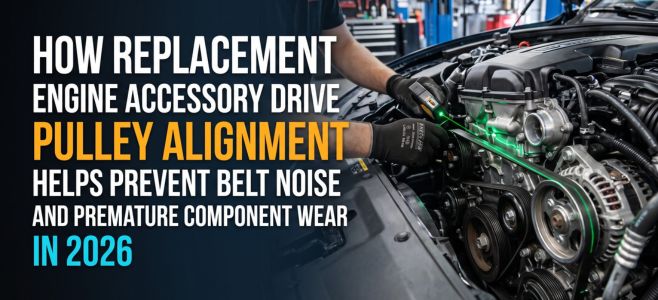
How Replacement Engine Accessory Drive Pulley Alignment Helps Prevent Belt Noise and Premature Component Wear in 2026
Replacing a vehicle engine involves more than installing a compatible engine block and reconnecting essential systems. Accessory drive components, including pulleys, belts, tensioners, and alternators, must also align correctly to support reliable operation. Even a small pulley alignment error can cause belt noise, uneven wear, and premature component failure. Buyers comparing quality used engines should therefore consider accessory drive compatibility alongside engine condition. Whether sourcing a tested replacement engine or evaluating junkyard engines, checking pulley alignment before installation can help prevent avoidable repair costs and improve vehicle reliability in 2026.
What Is Engine Accessory Drive Pulley Alignment?
The accessory drive system transfers rotational power from the engine crankshaft to components such as the alternator, air-conditioning compressor, power steering pump where applicable, and other belt-driven accessories. Pulley alignment refers to the positioning of these pulleys relative to one another. In a properly aligned system, the belt follows the intended path without excessive lateral movement, twisting, or uneven loading.
Misalignment can occur when a replacement engine has different accessory brackets, an incorrectly installed pulley, a damaged mounting point, or components that do not match the original vehicle configuration. Correct alignment helps maintain stable belt tracking and reduces unnecessary stress on the belt and associated components.
Why Pulley Alignment Matters After Engine Replacement
A replacement engine may share the same displacement as the original engine but still differ in accessory mounting arrangements or pulley specifications. These differences can create installation challenges if compatibility is not confirmed beforehand. Common causes of pulley misalignment include:
- Incorrect accessory brackets
- Bent or damaged mounting hardware
- Improperly seated pulleys
- Incorrect pulley offset
- Worn tensioners or idler pulleys
- Damaged engine mounting points
- Mixing incompatible accessory drive components
When pulleys do not align properly, the belt may run at an angle or experience uneven loading. Over time, this can affect belt durability and the performance of belt-driven accessories. Before completing an engine swap, technicians should compare the replacement engine’s accessory configuration with the vehicle manufacturer’s specifications.
How Misalignment Causes Belt Noise
Unusual belt noise is one of the most noticeable symptoms of an accessory drive problem. However, not every squeal or chirp is caused by pulley misalignment.
- Belt Squealing: A high-pitched squeal may occur when the belt slips against a pulley. Possible causes include insufficient tension, contamination, worn belt surfaces, excessive accessory resistance, or alignment problems.
- Belt Chirping: A repeated chirping sound may indicate that the belt is tracking incorrectly or that pulley alignment needs inspection. Worn bearings and damaged pulleys can also produce similar sounds.
- Belt Fraying and Edge Damage: When a belt runs at an angle, one edge may experience increased friction. Visible fraying, uneven wear, or movement toward the edge of a pulley can indicate an underlying alignment or component problem.
Replacing the belt without identifying the original cause may result in the same symptoms returning. A technician should inspect belt routing, pulley alignment, tension, and accessory condition before recommending repairs.
The Relationship Between Pulley Alignment and Component Wear
Incorrect alignment can place additional stress on accessory drive components.
- Belt wear: Uneven contact and lateral movement can accelerate belt deterioration.
- Tensioner wear: Misalignment may increase irregular loading and movement in the tensioner assembly.
- Bearing damage: Excessive side loading can contribute to premature wear in pulley or accessory bearings.
- Alternator performance issues: If belt slip occurs, the alternator may not rotate as intended, potentially affecting charging performance.
- Air-conditioning problems: A slipping belt or failing accessory pulley can interfere with compressor operation in belt-driven systems.
These symptoms do not automatically confirm pulley misalignment. Proper diagnosis helps distinguish alignment problems from worn bearings, faulty tensioners, damaged belts, and other mechanical faults.
What to Inspect When Choosing Quality Used Engines
Buyers researching quality used engines should evaluate both the engine’s mechanical condition and its suitability for the intended vehicle. Before purchase, ask the supplier about the engine code, vehicle application, mileage information, inspection history, and available warranty coverage. Where possible, compare accessory brackets, crankshaft pulley specifications, and belt routing with the original engine.
A replacement engine may require compatible accessories or approved component transfers from the original engine. These decisions should be based on manufacturer specifications rather than visual similarity alone.
Also inspect accessible mounting points and pulley surfaces for obvious damage. If the engine has been removed from a vehicle, request photographs or inspection documentation when a physical inspection is not possible.
Are Junkyard Engines Suitable for Engine Replacement?
Junkyard engines can provide a cost-conscious replacement option, but their condition and available documentation vary considerably. Some may have useful service histories or inspection records, while others may have limited information about their previous operation.
Before purchasing, verify the engine identification, application compatibility, and return or warranty terms. Ask whether accessory components are included and whether their condition has been checked.
If the engine comes with pulleys, brackets, or tensioners, have these components inspected before installation. Reusing damaged or incompatible parts can create additional repair expenses even when the replacement engine itself is serviceable. The total purchase cost should include any necessary accessories, installation work, fluids, belts, and diagnostic checks.
Best Practices for Preventing Pulley Alignment Problems
Following a structured installation process can help reduce accessory drive issues.
- Verify compatibility: Confirm engine and accessory specifications before installation.
- Inspect mounting brackets: Check for cracks, deformation, corrosion, or incorrect hardware.
- Check pulley alignment: Use the appropriate measuring tools and manufacturer procedures.
- Inspect the belt and tensioner: Replace worn or damaged parts when required.
- Follow the correct belt routing: Use the vehicle-specific routing diagram.
- Test after installation: Observe belt tracking and listen for unusual noise while following safe workshop procedures.
- Investigate recurring symptoms: Do not repeatedly replace belts without diagnosing the underlying problem.
These steps help establish a reliable accessory drive system after engine replacement.
Final Thoughts
Accessory drive pulley alignment plays an important role in preventing belt noise, uneven wear, and premature component damage after an engine swap. Checking brackets, pulley offsets, belt routing, and tensioner condition can help identify problems before they lead to additional repairs.
Whether purchasing quality used engines or comparing junkyard engines, buyers should consider accessory compatibility and installation requirements as part of the overall evaluation. Combining careful inspection with correct installation procedures can support dependable engine operation and reduce avoidable maintenance costs in 2026.
Frequently Asked Questions
1. What causes accessory drive pulley misalignment?
Common causes include incorrect brackets, damaged mounting points, improperly seated pulleys, incompatible components, and worn accessory drive parts.
2. Can pulley misalignment cause belt squealing?
Yes, it can contribute to belt noise, but worn belts, incorrect tension, contamination, and failing accessories can produce similar symptoms.
3. Should I replace the belt when installing a used engine?
The belt should be inspected carefully and replaced if worn, damaged, contaminated, or due for replacement under the manufacturer’s maintenance recommendations.
4. Are junkyard engines worth considering?
They can be a cost-conscious option when compatibility, condition, documentation, and warranty or return terms are evaluated carefully.
5. How can I confirm pulley alignment after an engine swap?
A qualified technician can inspect pulley positions, belt tracking, mounting hardware, and tension using the vehicle manufacturer’s procedures.