
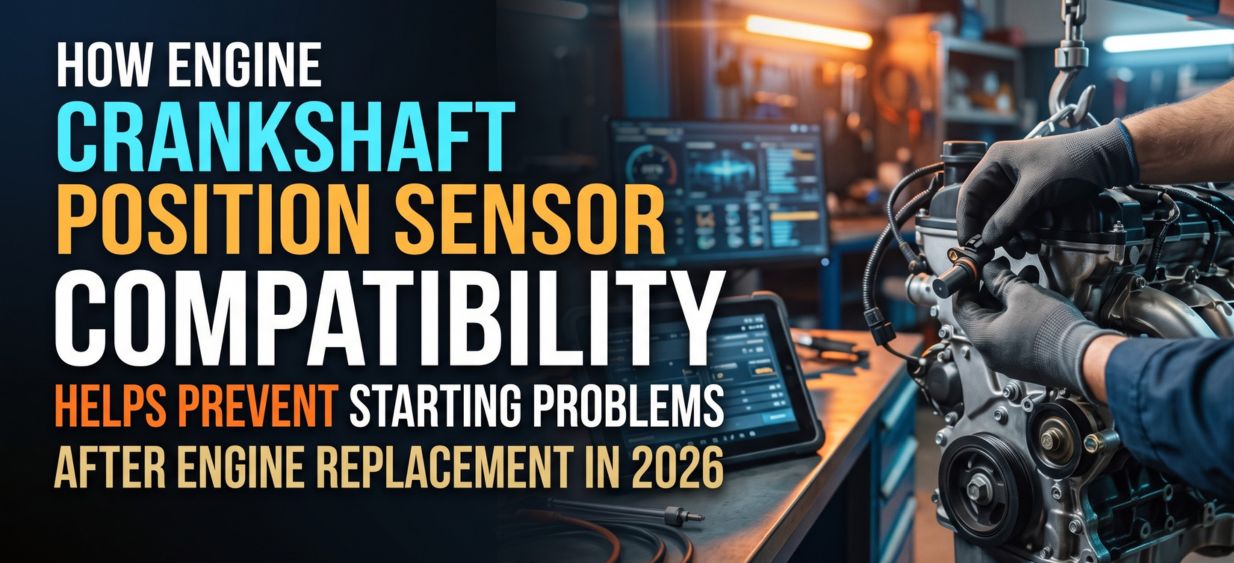
How Engine Crankshaft Position Sensor Compatibility Helps Prevent Starting Problems After Engine Replacement in 2026
Replacing an engine can restore a vehicle’s performance, but the replacement must work correctly with the vehicle’s electronic control system. One important component to verify is the crankshaft position sensor, which helps the engine control module (ECM) determine crankshaft position and rotational speed. Buyers searching for used engines for sale or affordable used engines should consider sensor compatibility before purchasing an engine to help prevent starting issues, misfires, and unnecessary installation expenses in 2026.
What Is a Crankshaft Position Sensor?
The crankshaft position sensor monitors the crankshaft’s movement and sends signals to the engine control module. The ECM uses this information to coordinate ignition timing and fuel injection, depending on the vehicle’s design.
If the sensor signal is missing, inaccurate, or incompatible, the engine may crank without starting. Other symptoms can include intermittent stalling, rough running, or a check-engine warning light. Although the sensor is relatively small, its compatibility can significantly affect replacement engine operation.
Why Sensor Compatibility Matters After Engine Replacement
Not every engine from the same vehicle manufacturer uses an identical crankshaft position sensor. Compatibility may vary according to the engine code, model year, displacement, production revision, wiring connector, and engine management system.
A replacement engine may physically fit the vehicle while requiring a different sensor configuration or trigger-wheel arrangement. Before installation, technicians should verify:
- The replacement engine code and vehicle application
- The sensor’s part number and approved supersessions
- The electrical connector and wiring configuration
- The sensor mounting position and dimensions
- The trigger wheel or reluctor pattern, where applicable
- Compatibility with the vehicle’s ECM and calibration
Checking these details helps reduce the risk of installing an engine that turns over but fails to start because its position signal is not being read correctly.
Common Starting Problems Caused by Sensor Mismatches
A crankshaft position sensor mismatch can produce several symptoms, although similar problems may also result from wiring faults, incorrect installation, or other engine issues.
- Engine Cranks but Does Not Start: The starter may turn the engine normally, but the ECM may not receive a usable crankshaft signal. In some vehicles, this prevents the control system from providing the required ignition or injection commands.
- Intermittent Starting: An incorrect sensor, damaged connector, or incompatible signal pattern may cause inconsistent readings. The vehicle might start occasionally but fail under certain conditions.
- Unexpected Engine Stalling: If the crankshaft signal drops out while driving, the engine may stall. However, technicians should test the sensor circuit and related components before assuming the replacement engine is responsible.
- Diagnostic Trouble Codes: Codes related to crankshaft position or signal correlation may appear during diagnosis. These codes provide useful clues, but they do not automatically prove that the sensor itself is defective.
How to Check Sensor Compatibility Before Buying a Used Engine
A little preparation can help buyers avoid costly surprises. When comparing used engines for sale, provide the supplier with the vehicle identification number (VIN), original engine code, model year, and relevant engine specifications.
Ask the supplier to confirm the replacement engine’s application and whether it uses the same crankshaft position sensor arrangement as the original engine. Important checks include:
- Part-number verification: Compare the original sensor number with the replacement application using reliable parts catalog information.
- Trigger-wheel compatibility: Confirm that the reluctor or trigger pattern matches the vehicle’s engine management requirements.
- Connector inspection: Check that the connector and wiring arrangement are appropriate.
- Installation requirements: Determine whether the sensor must be transferred from the original engine or whether a specified replacement part is required.
- Documentation: Keep the engine identification details and supplier confirmation for future reference.
Avoid relying only on vehicle make, model, or engine appearance. Two engines that look similar may use different electronic components.
Are Affordable Used Engines a Reliable Option?
Choosing affordable used engines can help control repair costs, but the lowest purchase price should not be the only consideration. An engine that requires additional sensors, wiring repairs, or repeated diagnostic work may become more expensive overall.
Before purchasing, evaluate the engine’s compatibility, documented condition, mileage history where available, included components, and return or warranty terms. Ask whether the engine is supplied with the crankshaft position sensor and whether that component has been inspected. If the sensor is not included, confirm which part is appropriate for the replacement engine and vehicle.
Warranty coverage varies by supplier. Check whether the warranty covers the engine assembly only or includes any supplied electronic components. Also confirm installation requirements and whether pre-installation inspection is necessary to preserve coverage.
What to Do If the Replacement Engine Will Not Start
If the engine cranks but does not start after installation, avoid replacing parts at random. A systematic diagnostic process is more effective.
- Scan the vehicle for diagnostic trouble codes.
- Check battery voltage, fuses, grounds, and relevant wiring connections.
- Inspect the crankshaft position sensor connector and mounting.
- Use a compatible scan tool to check whether the ECM detects an engine-speed signal while cranking.
- Test the sensor and circuit according to the vehicle manufacturer’s procedures.
- Verify sensor and trigger-wheel compatibility if the original engine and replacement engine differ.
- Check other possible causes, including fuel delivery, ignition, immobilizer authorization, and mechanical timing.
Some sensors require specific air gaps, alignment, or installation procedures. Follow the service information for the exact vehicle rather than assuming every sensor is installed the same way.
Final Thoughts
Crankshaft position sensor compatibility is an important consideration when replacing an engine in 2026. A mismatch involving the sensor, wiring, trigger wheel, or engine control system can contribute to no-start conditions and diagnostic complications.
Buyers researching used engines for sale should confirm the exact engine application and electronic compatibility before purchasing. Likewise, those comparing affordable used engines should consider the total installation cost, documentation, and warranty conditions rather than price alone.
Careful parts verification, professional installation, and systematic testing can help reduce avoidable starting problems and support reliable replacement engine performance.
Frequently Asked Questions
1. Can a crankshaft position sensor prevent a replacement engine from starting?
Yes. If the engine control module does not receive a valid crankshaft position signal, the vehicle may crank without starting. Other faults can cause similar symptoms, so proper diagnosis is necessary.
2. Can I reuse the crankshaft position sensor from my old engine?
Sometimes. Reuse depends on the sensor’s condition, part compatibility, mounting arrangement, and the replacement engine’s specifications. Verify compatibility before transferring the component.
3. Does a compatible sensor guarantee that the engine will start?
No. Starting also depends on factors such as fuel delivery, ignition, battery condition, wiring, mechanical timing, and immobilizer operation.
4. What should I check before buying affordable used engines?
Verify the engine code, vehicle fitment, sensor and trigger-wheel configuration, documented condition, included components, and warranty terms with the supplier.