
Low-Mileage Used Engines vs New Crate Engines: Which Delivers Better Value in 2026?
Engine replacement is one of the most significant repair decisions a vehicle owner can face. In 2026, rising automotive repair costs, increasing vehicle longevity, and ongoing supply chain challenges have made consumers more focused than ever on maximizing value when replacing a failed engine.
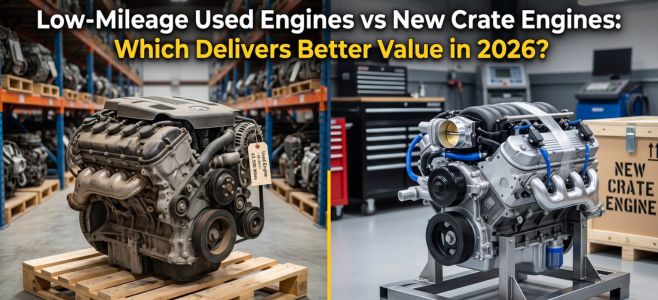
Among the most popular options are low-mileage used engines and new crate engines. Both solutions offer unique advantages, but they differ significantly in terms of cost, reliability, availability, and long-term return on investment. As more drivers seek affordable alternatives, demand for OEM used auto parts and quality used engines continues to grow across the automotive industry.
Understanding the strengths and weaknesses of each option can help vehicle owners make the right decision for their budget and long-term transportation needs.
What Is a Low-Mileage Used Engine?
A low-mileage used engine is an original factory engine removed from a donor vehicle that has relatively low operating miles.
These engines often come from:
- Accident-damaged vehicles
- Insurance write-offs
- Fleet retirements
- Salvage auctions
In many cases, the vehicle is declared a total loss due to body damage while the engine remains fully functional.
Because the engine retains its original factory assembly, many buyers view it as a reliable replacement option.
What Is a New Crate Engine?
A crate engine is a brand-new engine sold directly by a manufacturer or authorized supplier. These engines are:
- Factory assembled
- Unused
- Fully tested
- Ready for installation
Crate engines are typically shipped in protective crates, which is where the name originates.
They offer the advantage of zero prior usage and often include manufacturer-backed warranties.
Comparing Initial Costs
One of the biggest differences between the two options is purchase price.
Low-Mileage Used Engines
Typically offer:
- Lower upfront costs
- Greater affordability
- Better value for older vehicles
- Reduced repair expenses
New Crate Engines
Generally involve:
- Higher purchase prices
- Increased shipping costs
- Larger installation investments
For many vehicle owners, the cost difference can be several thousand dollars. This is one reason why quality used engines continue growing in popularity.
OEM Engineering Advantages
A major benefit of OEM used auto parts is that they retain original factory engineering. OEM engines are built using:
- Precision manufacturing
- Strict quality standards
- Extensive testing procedures
When sourced from reputable suppliers, low-mileage OEM engines often provide dependable performance and excellent compatibility.
Since the engine was originally designed specifically for the vehicle, installation is typically straightforward.
Reliability Considerations
Many consumers assume that a brand-new crate engine is always the most reliable option.
While new engines offer certain advantages, modern low-mileage engines can also deliver impressive longevity.
Today’s engines are often capable of lasting:
- 200,000 miles
- 250,000 miles
- 300,000 miles or more
A used engine with relatively low mileage may still have the majority of its service life remaining.
When properly maintained, it can provide years of dependable operation.
Availability and Delivery Times
Availability has become increasingly important in 2026.
Supply chain disruptions can sometimes affect new engine production and delivery schedules.
Low-mileage used engines often provide:
- Faster availability
- Larger inventory selections
- Quicker shipping
- Reduced vehicle downtime
For drivers who need their vehicles back on the road quickly, used engines may offer a significant advantage.
Warranty Coverage
Warranty protection is a key consideration.
Crate Engines
Typically include:
- Manufacturer warranties
- Extended coverage options
- Factory-backed support
Quality Used Engines
Many reputable suppliers now offer:
- Limited warranties
- Mileage-based coverage
- Parts protection plans
While warranty terms may vary, the gap between used and new engine coverage continues to narrow.
Environmental Benefits
Sustainability is becoming a major factor in automotive repairs.
Choosing OEM used auto parts helps:
- Reduce manufacturing demand
- Lower energy consumption
- Minimize waste
- Extend component life cycles
Reusing engines prevents functional components from entering landfills and supports environmentally responsible vehicle ownership.
Installation Costs
Installation expenses can influence the overall value equation. Both options generally require similar labor costs.
However, used engines may offer additional savings because:
- OEM compatibility reduces modification requirements
- Existing accessories may transfer more easily
- Fitment issues are less likely
These factors can help keep repair costs under control.
Best Choice for Older Vehicles
For many aging vehicles, investing in a new crate engine may not make financial sense. Consider a vehicle worth $8,000 to $12,000.
Installing a costly new crate engine could consume a significant percentage of the vehicle’s value. In such situations, quality used engines often provide a more practical solution.
Why Repair Shops Recommend Used Engines
Many automotive repair facilities increasingly recommend used OEM engines because they provide:
- Reliable performance
- Lower customer costs
- Faster sourcing
- Proven compatibility
These benefits help customers restore their vehicles without exceeding their budgets.
How to Evaluate a Used Engine
Not all used engines offer equal value. Before purchasing, buyers should verify:
- Mileage records
- Vehicle history
- Inspection reports
- Compression test results
- Warranty availability
Working with reputable suppliers significantly reduces purchasing risks.
When a Crate Engine Makes Sense
Although used engines offer excellent value, crate engines may be ideal when:
- Long-term ownership is planned
- Maximum warranty coverage is desired
- Performance upgrades are required
- No suitable used engine is available
The right choice ultimately depends on the vehicle owner’s goals and budget.
Future Trends in Engine Replacement
Industry experts expect continued growth in the market for OEM used auto parts. Factors driving demand include:
- Rising repair costs
- Improved recycling standards
- Better engine testing technologies
- Expanded warranty programs
- Increased sustainability awareness
As these trends continue, used engine replacements are likely to become even more attractive.
Which Option Delivers Better Value?
For most everyday drivers, low-mileage used engines often provide the strongest balance of:
- Cost savings
- Reliability
- Availability
- OEM quality
- Environmental benefits
While crate engines offer the appeal of brand-new components, their significantly higher cost can limit overall value for many vehicle owners.
Final Thoughts
In 2026, both low-mileage used engine and new crate engines offer viable solutions for major engine replacements. However, for cost-conscious consumers seeking dependable performance, OEM used auto parts and quality used engines frequently provide the best overall value.
With lower upfront costs, strong reliability, OEM compatibility, and growing warranty options, low-mileage used engine continue to be one of the smartest repair investments available. By carefully evaluating vehicle value, ownership goals, and supplier quality, drivers can choose the engine replacement solution that delivers the greatest long-term return on investment.