
Engine Knocking Sound? Causes, Fixes & When to Replace Your Engine
Hearing a knocking sound from your engine can be alarming. It’s one of the most common warning signs that something isn’t right under the hood. Ignoring it can lead to serious damage and costly repairs.
In this complete guide, we’ll explain the causes of engine knocking, how to fix it, and when it’s time to consider solutions like OEM used auto parts or used engines with warranty.
What Is Engine Knocking?
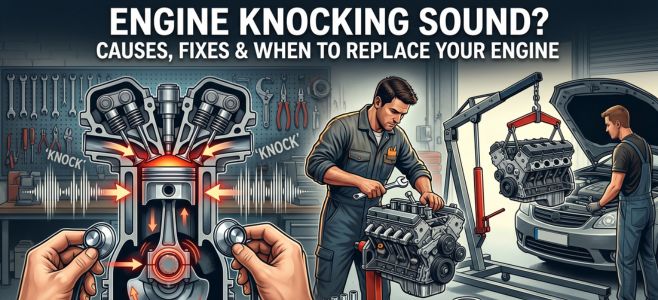
Engine knocking (also called “pinging”) is a repetitive tapping or knocking noise coming from the engine. It usually occurs when fuel burns unevenly inside the cylinders.
Common Causes of Engine Knocking
1. Low-Quality Fuel
Problem:
Using low-octane fuel can cause improper combustion.
Fix:
- Switch to higher-octane fuel
- Use recommended fuel type
2. Carbon Buildup
Problem:
Deposits inside the engine disrupt combustion.
Fix:
- Use fuel additives
- Perform engine cleaning
3. Worn Engine Components
Problem:
Damaged pistons, bearings, or valves.
Fix:
- Replace worn parts using OEM used auto parts
4. Overheating Engine
Problem:
High temperatures affect combustion timing.
Fix:
- Check coolant levels
- Inspect radiator and cooling system
5. Incorrect Air-Fuel Mixture
Problem:
Too much air or fuel disrupts ignition.
Fix:
- Clean fuel injectors
- Check sensors
6. Faulty Spark Plugs
Problem:
Worn or incorrect spark plugs can cause knocking.
Fix:
- Replace spark plugs
- Use manufacturer-recommended type
7. Timing Issues
Problem:
Incorrect ignition timing leads to premature combustion.
Fix:
- Adjust timing
- Use diagnostic tools
How to Diagnose Engine Knocking
- Listen Carefully: Identify when the knocking occurs (idle, acceleration, etc.)
- Check Dashboard Lights: Look for warning indicators.
- Inspect Engine Components: Check spark plugs, fuel system, and cooling system.
- Use OBD Scanner: Detect error codes for accurate diagnosis.
Quick Fixes for Engine Knocking
- Use Better Fuel: Switch to high-quality fuel immediately.
- Replace Spark Plugs: Simple and cost-effective fix.
- Clean Engine Internals: Remove carbon buildup.
- Fix Cooling Issues: Prevent overheating damage.
- Replace Faulty Parts: Use OEM used auto parts for reliable and affordable repairs.
When Engine Knocking Becomes Serious
If the knocking persists despite basic fixes, it may indicate:
- Severe internal damage
- Worn-out engine components
- Bearing failure
When to Replace Your Engine
Replacing the engine may be necessary if:
- Repair costs are too high
- Engine performance drops significantly
- Knocking becomes constant
Smart Option:
Choose used engines with warranty to save money while ensuring reliability.
Cost-Saving Tips
- Use OEM used auto parts instead of new parts
- Compare prices from multiple sellers
- Choose engines with warranty coverage
- Avoid unnecessary replacements
Tips to Prevent Engine Knocking
- Use recommended fuel
- Change oil regularly
- Maintain cooling system
- Service your car on time
Common Mistakes to Avoid
- Ignoring knocking sounds
- Using poor-quality fuel
- Delaying repairs
- Overheating the engine
When to See a Mechanic
Consult a professional if:
- Knocking noise increases
- Engine loses power
- Warning lights stay on
Final Thoughts
Engine knocking is a warning sign you should never ignore. While some causes are minor and easy to fix, others can lead to serious damage if left untreated.
By diagnosing the issue early and using reliable solutions like OEM used auto parts or opting for used engines with warranty when necessary, you can save money and keep your vehicle running smoothly.
Stay proactive, maintain your engine regularly, and address problems early to avoid costly repairs and ensure long-term performance.