
Top Engine Components That Fail After 100K Miles (And When to Replace Them)
Crossing 100,000 miles is a major milestone for any vehicle-but it’s also the point where many engine components begin to wear out. While modern engines are built to last longer than ever, certain parts naturally degrade over time due to heat, friction, and constant use.
Ignoring these aging components can lead to serious damage, poor performance, or even full engine failure. In many cases, delayed maintenance forces owners to consider costly solutions like quality used engines or sourcing OEM used auto parts for repairs.
In this guide, we’ll break down the top engine components that commonly fail after 100K miles and when you should replace them.
Why Parts Fail After 100K Miles
Even with proper maintenance, engine components wear out over time.
Main Reasons:
- Continuous heat cycles
- Friction between moving parts
- Fluid breakdown
- Carbon buildup
- Aging rubber and seals
That’s why preventive replacement becomes critical after this mileage point.
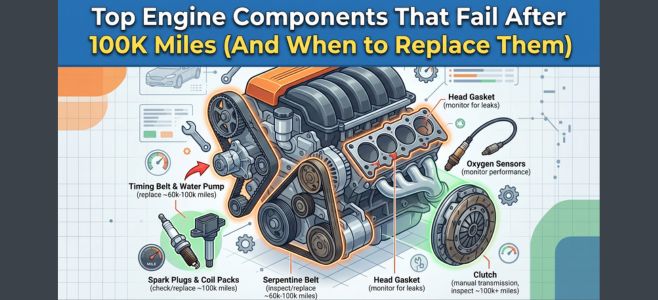
1. Timing Belt or Timing Chain
This is one of the most critical engine components.
When It Fails:
- Usually between 80K-120K miles (belt)
- Chains last longer but still wear
Warning Signs:
- Ticking noise
- Engine misfire
- Difficulty starting
When to Replace:
- Follow manufacturer schedule
- Replace proactively to avoid engine damage
A broken timing belt can destroy the engine instantly.
2. Water Pump
The water pump keeps coolant flowing through the engine.
Signs of Failure:
- Coolant leaks
- Overheating
- Grinding noise
When to Replace:
- Around 100K miles
- Often replaced with timing belt
Neglecting this can lead to overheating and engine failure.
3. Spark Plugs and Ignition Coils
These are essential for combustion.
Symptoms:
- Rough idle
- Poor fuel economy
- Engine misfires
- Hard starting
When to Replace:
- Spark plugs: 60K–100K miles
- Coils: As needed or during misfires
4. Engine Mounts
Mounts hold the engine in place and absorb vibration.
Signs:
- Excess vibration
- Clunk when accelerating
- Engine movement
When to Replace:
- Typically after 100K miles
5. Fuel Injectors
Fuel injectors deliver fuel into the engine.
Symptoms:
- Poor fuel economy
- Rough idle
- Loss of power
When to Replace:
- Clean regularly
- Replace if clogged or leaking
6. Oxygen Sensors
O2 sensors monitor exhaust gases and fuel mixture.
Signs:
- Check engine light
- Increased fuel consumption
- Emission issues
When to Replace:
- Around 100K miles
7. Gaskets and Seals
Rubber components degrade over time.
Common Failures:
- Valve cover gasket leaks
- Oil pan leaks
- Head gasket issues
Signs:
- Oil leaks
- Burning smell
- White smoke (head gasket)
Replacing these early prevents major engine damage.
8. Radiator and Cooling System Components
Cooling systems become less efficient over time.
Symptoms:
- Overheating
- Coolant leaks
- Poor AC performance
When to Replace:
- Radiator hoses: 5-7 years
- Thermostat: Around 100K miles
9. Alternator
The alternator powers your vehicle’s electrical system.
Signs:
- Battery warning light
- Dim headlights
- Electrical failures
When to Replace:
- Typically between 100K-150K miles
10. PCV Valve (Positive Crankcase Ventilation)
This small part plays a big role in engine health.
Signs:
- Oil leaks
- Rough idle
- Increased oil consumption
When to Replace:
- Around 100K miles or earlier
Warning Signs of Major Engine Trouble
If multiple components fail together, the engine may be at risk.
Watch For:
- Knocking sounds
- Heavy smoke
- Severe oil consumption
- Loss of power
- Overheating
At this stage, repairs may become expensive.
Repair vs Replacement Decision
When Repair Makes Sense:
- Only one or two components failing
- Engine still runs smoothly
- No internal damage
When Replacement Makes Sense:
- Multiple major failures
- High repair cost
- Internal engine damage
- Repeated breakdowns
In such cases, many owners explore quality used engines or reliable OEM used auto parts to reduce costs.
Benefits of OEM Used Auto Parts
Using OEM used auto parts ensures:
- Proper fitment
- Original manufacturer quality
- Better compatibility
- Lower cost than new parts
They are often preferred over aftermarket options.
Pro Tips for 100K+ Mile Vehicles
- Stay Ahead of Maintenance: Replace parts before they fail completely.
- Use Quality Parts: Cheap components wear out faster.
- Monitor Fluids Regularly: Oil and coolant issues can accelerate wear.
- Listen to Your Car: Unusual sounds often indicate early problems.
Mistakes to Avoid
- Ignoring small leaks
- Skipping scheduled maintenance
- Using low-quality replacement parts
- Waiting for complete failure
- Overlooking warning lights
Final Thoughts
After 100,000 miles, your engine enters a critical phase where several components begin to wear out. Replacing key parts like timing belts, water pumps, spark plugs, and sensors at the right time can prevent major breakdowns.
Delaying maintenance can lead to expensive repairs or even full engine replacement. If damage becomes severe, many drivers consider quality used engines or rely on OEM used auto parts to keep costs manageable.
Stay proactive, follow maintenance schedules, and your vehicle can continue running strong well beyond 100K miles.